
About
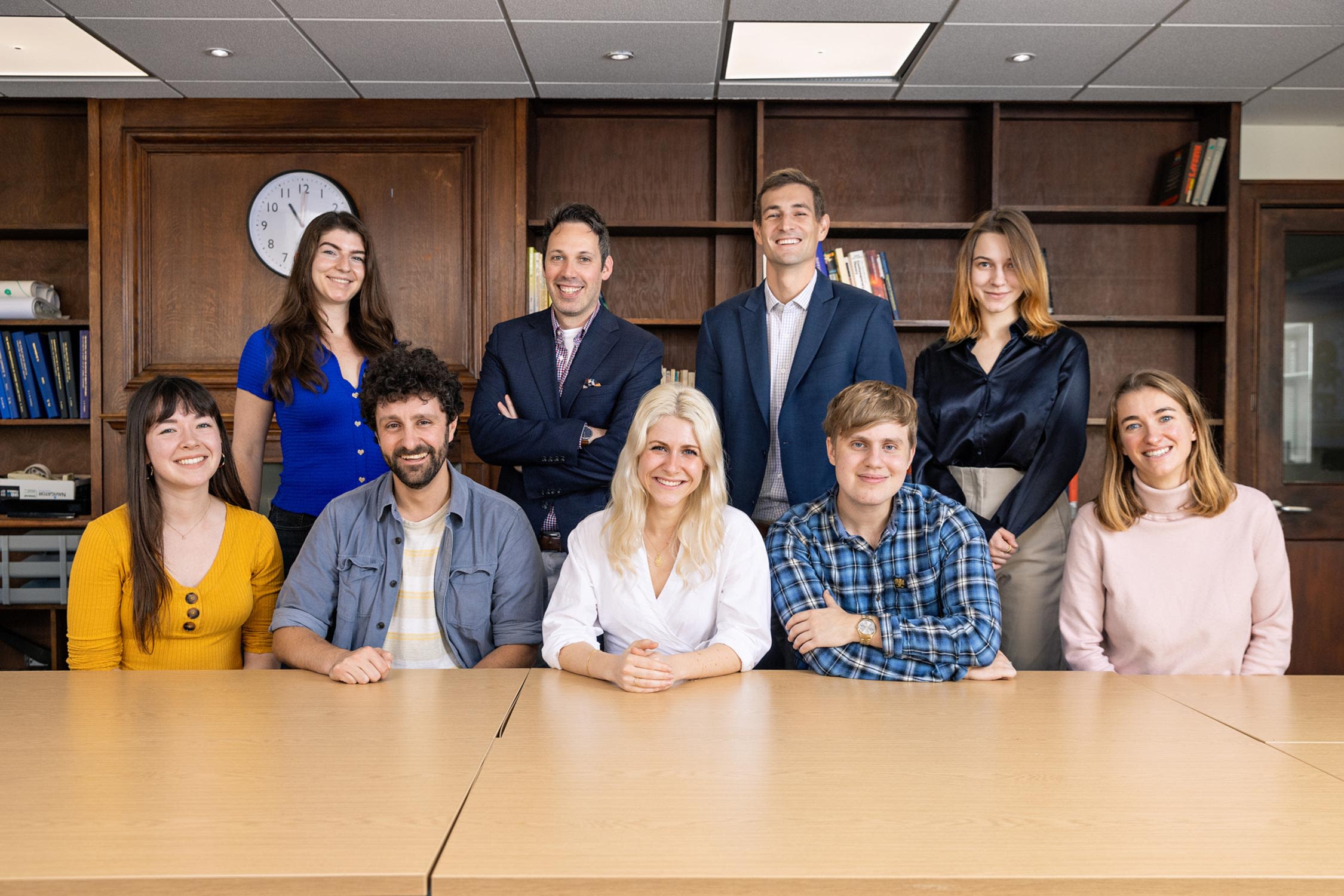
The Cambridge Social Decision-Making Lab (CSDMLab) explores the basic social and cognitive psychological processes underlying human social judgment, communication, and decision-making. We are particularly interested in the persuasion and influence process, especially how to "inoculate" people against online misinformation and manipulation. We also explore human-technology interactions (e.g., biases in AI, deepfakes, social media) and how social norms shape human cooperation and decision-making in real-world social dilemmas. Examples include climate change and sustainability, misinformation, extremism, polarization, intergroup conflict, public health, voting, crime, and prejudice. We are also interested in the psychological foundations of trust, risk, and uncertainty, public understanding of science, and how insights from our research can improve behavioural policymaking.
Our work is guided by full-cycle action research, integrating insights from different methodologies (from computational social science to lab studies to online interventions to neuroimaging), moving continuously from the lab to the field and back. A fundamental guiding principle is that a discipline which aims to explore "the science of mind and behaviour" ought to be informed by real-world human social behaviour and decision-making. In the words of the great Kurt Lewin; "Nothing is as practical as a good theory, but research that produces nothing but books will not suffice".
Accordingly, the Social Decision-Making Lab strives to conduct psychological science in the public interest, which intersects nicely with Cambridge University's core mission: to contribute to society through the pursuit, dissemination, and application of knowledge.